The detection of ¹⁴C is extremely challenging due to its very low natural concentration: the required sensitivity is 1 part in 10¹⁵.
Currently, several analytical techniques are available for radiocarbon determination; among the most well known are AMS (Accelerator Mass Spectrometry) and LSC (Liquid Scintillation Counting).
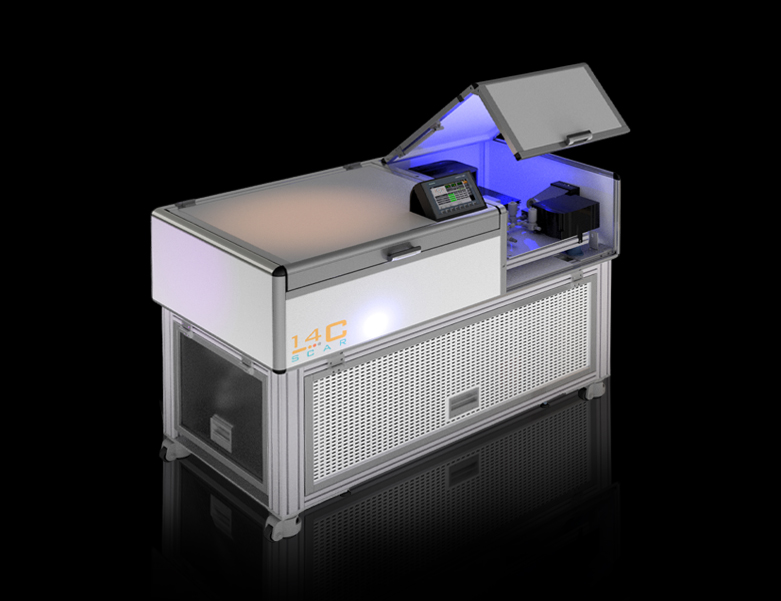
The ¹⁴C SCAR (Saturated-absorption CAvity Ring-down) spectrometer is a new and innovative instrument for measuring ¹⁴C.
It is capable of measuring the mole fraction of radiocarbon in any sample using the SCAR technique, which improves the limits of CRD (Cavity Ring-Down) by more than one order of magnitude.
The concept of Modern and Fossil Biogenic Carbon
The ¹⁴C SCAR instrument analyzes the CO₂ gas produced by combustion of the sample and derives the ¹⁴C concentration by measuring the spectral area of a specific molecular transition of the ¹⁴CO₂ molecule. If the sample originates from a modern living organism, the measured ¹⁴C concentration will be close to the so-called Natural Abundance or Modern Carbon Concentration (MC).
This corresponds to 100% Modern Carbon, i.e. 100 pMC. A similar measurement performed on a sample containing only fossil carbon will not show any signal corresponding to the ¹⁴CO₂ transition, since no ¹⁴C is present; this corresponds to 0 pMC.
Therefore, any result within the range 0 pMC – 100 pMC provides a direct measurement of the biogenic carbon content of the analyzed material.
To provide an accurate and precise radiocarbon measurement, it is often necessary to correct the obtained data for “isotopic fractionation” using the ¹³C and ¹²C isotopes. This correction removes the error introduced by differences in metabolic pathways and respiration between the sample and the modern reference material. For this reason, many end users tend to couple the ¹⁴C SCAR detector with an IRMS for determining the δ¹³C isotopic ratio.
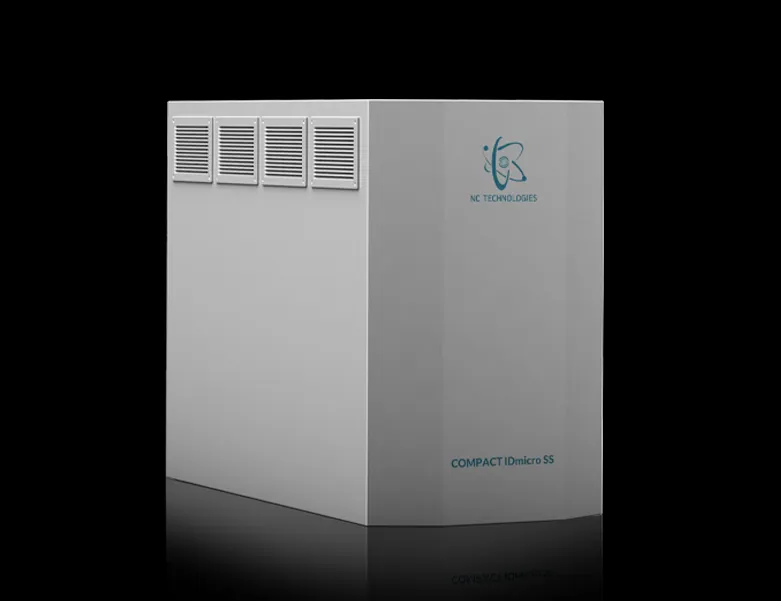
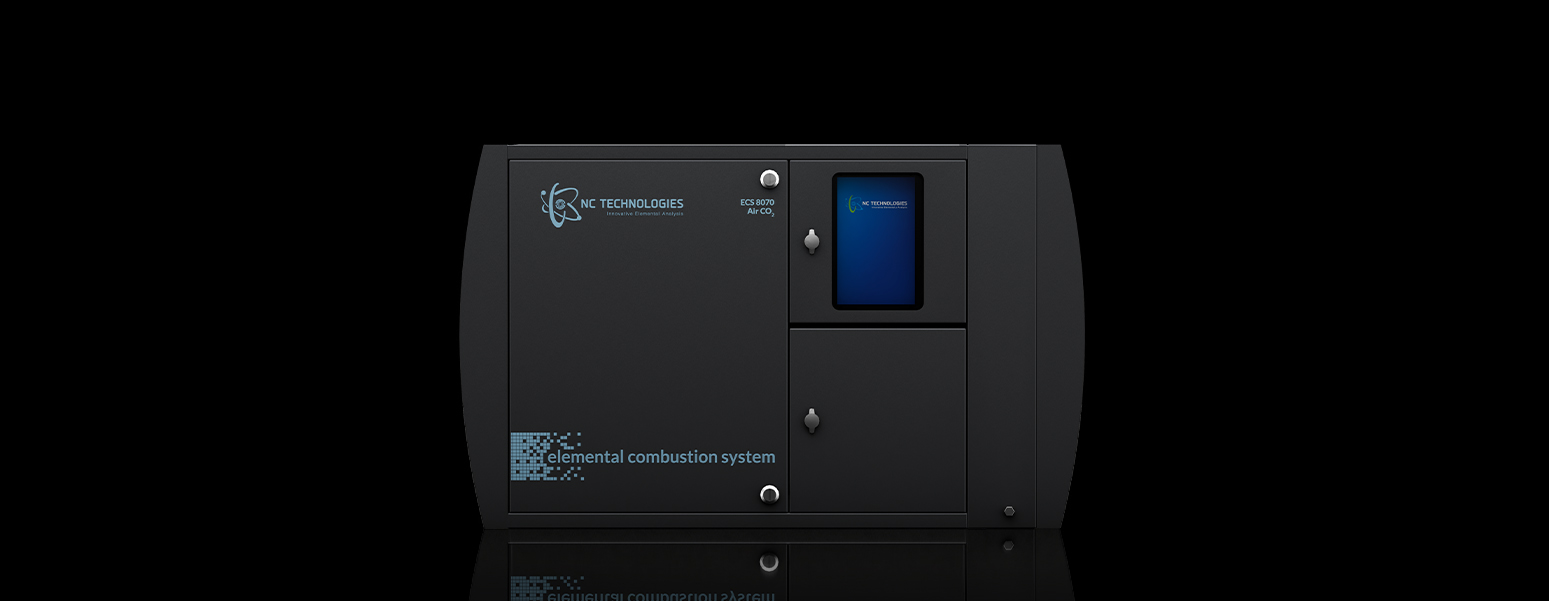
Depending on the nature of the sample to be measured and the analytical requirements, the 14C SCAR must be paired with one or more suitable peripheral devices: